Thinking about buying land in Hobart and building your own home? An empty parcel can look simple at first glance, but the real work starts when you verify whether the lot is actually ready for construction. If you want to avoid surprise costs, slow approvals, or a parcel that needs extra steps before you can build, it helps to know the local process up front. Let’s dive in.
Check if the land is buildable
Before you focus on house plans, make sure the parcel is a legal, buildable lot as it stands today. In Hobart, village zoning controls general zoning, while Brown County still handles shoreland, wetland, and floodplain zoning overlays where those rules apply.
That means a vacant parcel may still need careful review, even if it looks ready from the road. You will want to check the village zoning map, the official map, and the parcel’s land-division history before assuming you can move straight to permits.
Why lot history matters
Some land issues start long before construction. Brown County explains that a certified survey map, or CSM, is the legal recorded property description created by a registered surveyor, and it can be used to create up to four lots.
If five or more parcels are being created, the property generally moves into subdivision plat territory. That matters because the review path, timeline, and cost can change in a big way depending on how the parcel was created or whether more division is needed.
Buildable does not always mean simple
A lower-priced parcel can become expensive if it is not already a clean, buildable lot. Brown County notes that CSM review usually takes 21 to 40 days, but changes can stretch that timeline much longer, sometimes up to a year.
Subdivision plats can take far longer. For you as a buyer, that means land due diligence is often the first major timeline issue, not the house construction itself.
Confirm utilities and site access
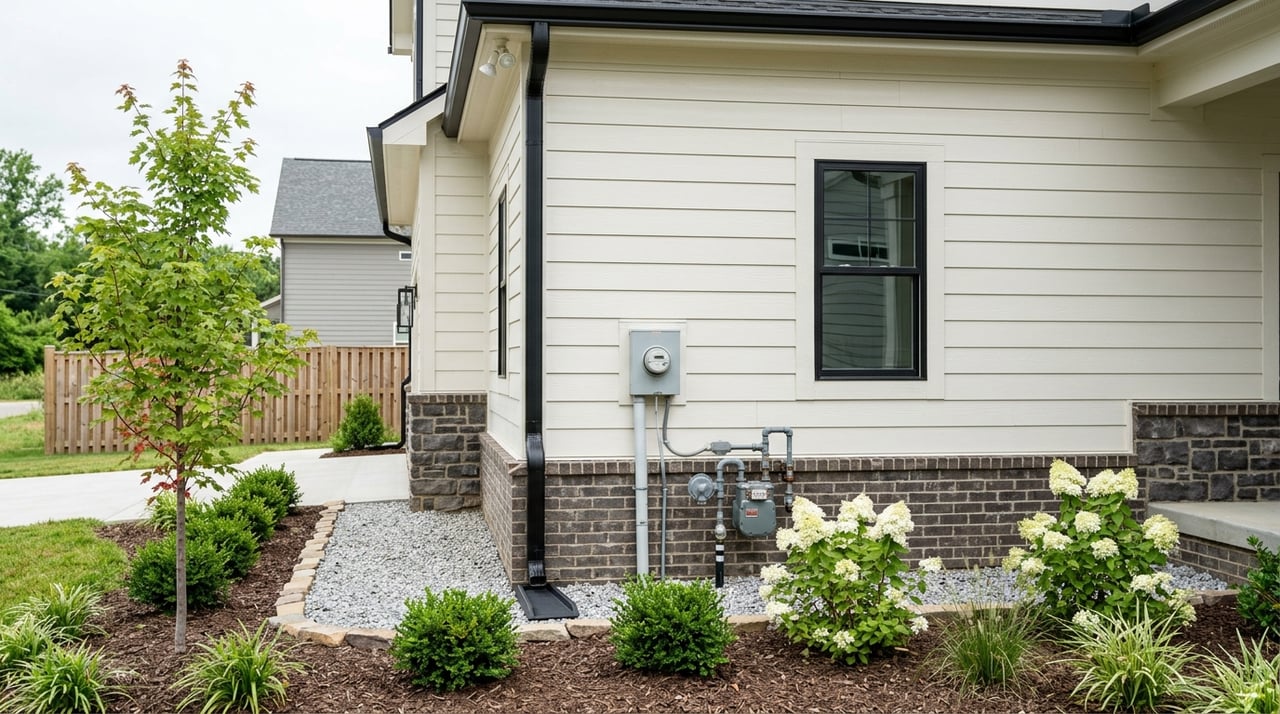
Hobart does have municipal water, sewer, and stormwater systems in place, which is a plus for many buyers. The village says water in northern Hobart comes through Green Bay Water Utility, while southern Hobart water comes through Ashwaubenon.
The village lists water at $4.70 per 1,000 gallons and sewer at $8.14 per 1,000 gallons. Even so, you should still confirm how the specific parcel will connect, what laterals or hookups may be needed, and whether site grading will affect your plans.
Stormwater still matters
Vacant land is not just about where the house sits. Hobart describes its stormwater system as a mix of ditches, culverts, retention and detention ponds, and curb-and-gutter infrastructure, which means drainage and runoff can affect site design and costs.
If the lot needs grading work or has water-management constraints, that can change your budget before the foundation is ever poured. This is one reason two similarly sized parcels can have very different development costs.
Driveway access may need a permit
If your parcel needs a new driveway or rural access point, Hobart uses a separate access-drive permit. According to the village form, that permit expires in one year.
The same form says one driveway or culvert can be included with the building permit at no extra charge. A second driveway or culvert with a building permit is $15, while a standalone driveway or culvert permit is $35.
Private wells need attention too
Not every parcel will rely only on municipal utility service. If a property uses a private well, Hobart Utility District has a separate well-operation permit process.
That form requires owner information and lab results, which is a good reminder that a well has an ongoing compliance side. If you are buying land with an existing well, confirm its status before closing rather than assuming it is ready to use.
Understand Hobart's permit process
In Hobart, you cannot use vacant land until a building permit is issued. Village code also says each building permit application must include a plat or certified survey map along with a sketch plan.
Once the application is submitted, the village will grant or deny the permit within 10 days. That is a relatively clear review window, but only after your application is complete.
Separate permits can affect your budget
The main building permit is only part of the process. Hobart’s forms page shows that electrical, HVAC, plumbing, and water-and-sewer permits may be separate items.
That matters because your true build cost is not just the house shell. You also need to account for trade permits, utility hookups, laterals, and the licensed subcontractors handling those parts of the job.
Contractor credentials are required
For one- and two-family homes, Wisconsin requires a Dwelling Contractor certification or Dwelling Contractor Restricted certification, plus a Dwelling Contractor Qualifier, before a permit can be issued. Hobart’s permit forms ask for contractor license and qualifier numbers.
Wisconsin’s Uniform Dwelling Code applies to one- and two-family dwellings built since June 1, 1980. For you, the practical takeaway is simple: verify your builder’s credentials early so permit processing does not stall later.
Plan for variance or zoning delays
Some parcels look usable but do not fit every rule on paper. If the lot has setback issues, unusual shape, access limitations, or another nonstandard condition, you may need formal relief before building can move forward.
Hobart’s code gives the Board of Appeals up to 60 days from filing to decide a variance request. Zoning amendments or conditional uses can involve public-hearing and commission-review steps, which adds time and uncertainty.
Early contact can reduce surprises
Hobart’s building and code compliance office says it helps with planning, plan review, permitting, and inspections. The village also encourages early contact during the planning stage to identify issues and reduce delays.
That is especially useful if you are comparing multiple lots. A quick reality check before you commit can save you from buying a parcel that turns into a much longer project than expected.
Budget for more than the house
When you build on land in Hobart, the lot price is only one part of the total cost. Brown County’s current fee schedule shows a $650 total fee for a Certified Survey Map, and Hobart’s forms page shows separate permits for building, electrical, HVAC, plumbing, water and sewer, access drive, and zoning or CSM applications.
The village also has a fee schedule effective January 1, 2026, which means exact permit costs should be confirmed against the current schedule rather than guessed. This is an easy place for buyers to underestimate expenses.
Site costs can change the math fast
A lot with clear access, utility connections, and fewer site issues is often less expensive to develop than raw land. National homebuilding data from NAHB found that construction costs made up 64.4% of the average new-home sales price in 2024, while finished lot costs accounted for another 13.7%.
Even though that is a national benchmark, it helps explain why two parcels with different utility or site conditions can lead to very different final budgets. The more work the land needs, the more your all-in cost can rise.
Construction extras are still real costs
Hobart’s permit guide also notes job-site restroom and dumpster requirements and says a construction deposit may be required. Even if your builder handles those logistics, they are still part of the project cost and timeline.
This is why a detailed pre-build budget matters. Small line items add up quickly when they are layered on top of survey work, permits, site prep, and contractor coordination.
Follow a smart order of operations
If you want the smoothest path, sequence matters. A practical order in Hobart is to verify zoning and lot status first, order the survey or CSM if needed, confirm utilities and driveway requirements, line up a Wisconsin-certified dwelling contractor, and then submit the permit package.
Because Hobart’s permit decision window is 10 days, while Brown County’s CSM review usually takes 21 to 40 days, land due diligence often becomes the pacing item. In other words, the parcel itself can slow the project before the actual building review ever begins.
How local guidance helps
Building on land is different from buying an existing home. You are not just evaluating price and location. You are also sorting through zoning, land-division history, utility coordination, driveway access, contractor credentials, and possibly variance or conditional-use steps.
That is where local, hands-on guidance can make a real difference. A well-connected agent can help you spot problems earlier, ask better questions before closing, and coordinate with the surveyor, builder, and village contacts involved in the process.
If you are considering land in Hobart and want a practical second set of eyes before you move forward, Team Forehand can help you evaluate the details, reduce friction, and make a more confident decision.
FAQs
What should you check before buying vacant land in Hobart?
- You should verify village zoning, the official map, land-division history, utility access, driveway requirements, and whether Brown County shoreland, wetland, or floodplain overlays apply.
How long does a Certified Survey Map review take in Brown County?
- Brown County says CSM review usually takes 21 to 40 days, but revisions can extend the process significantly.
How fast does Hobart decide on a building permit?
- Hobart code says the village will grant or deny a building permit within 10 days of application.
Do you need separate permits for a new home build in Hobart?
- Yes. Hobart’s forms page shows separate permits may be needed for building, electrical, HVAC, plumbing, and water-and-sewer work, along with other applications depending on the property.
What happens if a Hobart lot does not meet zoning rules?
- You may need a variance, conditional use, or another formal approval step, and a variance decision can take up to 60 days from filing.
Does a private well on Hobart land need review?
- Yes. If the property uses a private well, Hobart Utility District has a separate well-operation permit process that includes owner information and lab results.