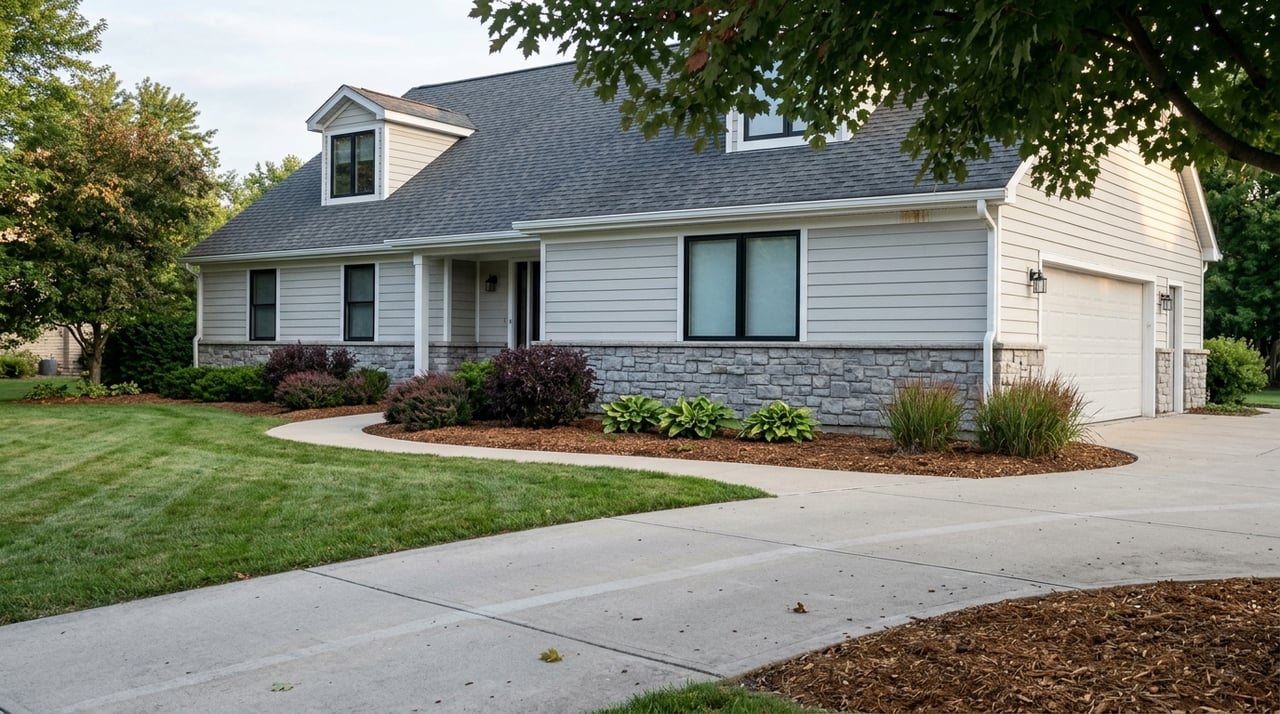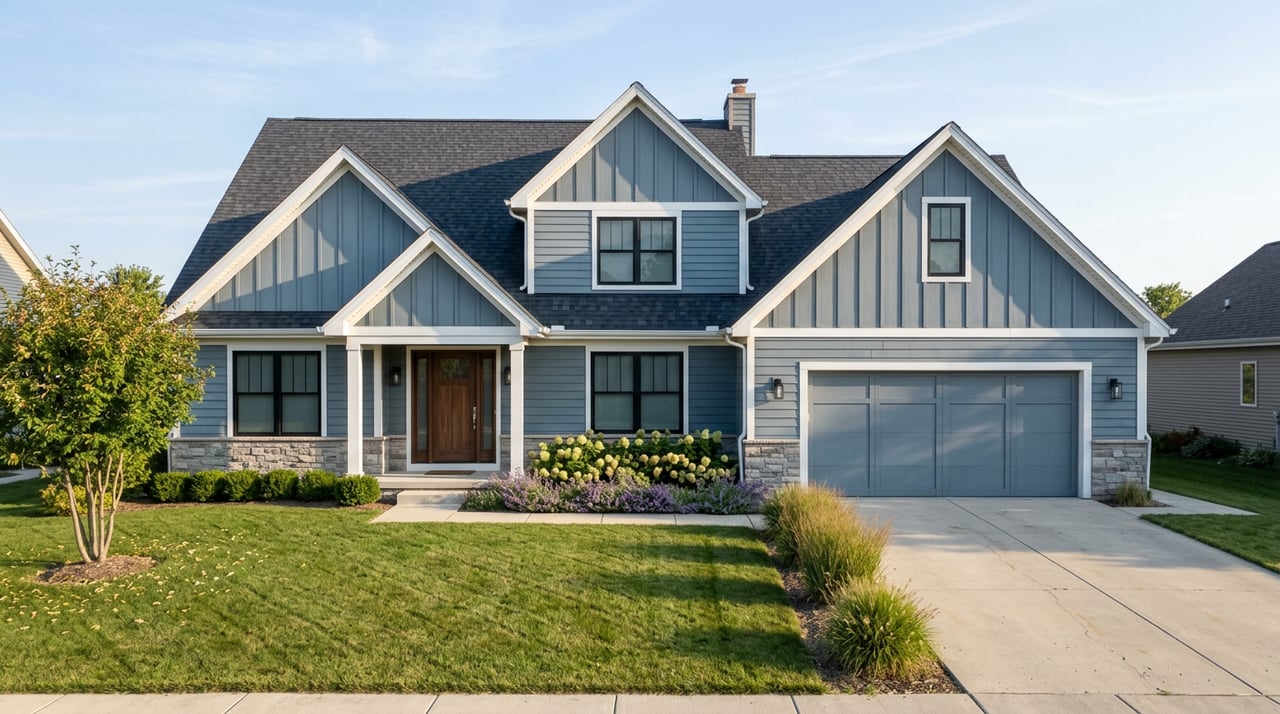
Two houses, same size, same age, five miles apart. One sits in De Pere. The other sits in Green Bay. This year, the De Pere owner opens an assessment notice showing a meaningful jump. The Green Bay owner opens a notice that barely changed at all. Neither owner has done anything different with their home. Neither market moved in a way that would explain the gap. The difference isn't the house. It's the measuring instrument.
De Pere's 2026 assessment update landed with an average citywide increase of about 8.3 percent, according to the city's own assessments page. If you're comparing that number to a flat or barely-moved notice from a neighboring community and concluding that De Pere's market is running hotter, you're reading two different systems as if they were one.
Two Cities, Two Clocks
Wisconsin law sets a floor, not a fixed schedule. The state requires that a municipality's assessments stay within 10 percent of actual market value, but it gives cities room on timing. Green Bay's assessor's office operates under the state minimum: the requirement is that assessments land within that 10 percent band at least once in any five-year period. Green Bay's most recent citywide revaluation was completed for the 2022 assessment year, and the city's own materials describe the years between full revaluations as maintenance years, where values are updated but not overhauled property by property.
De Pere chose a different clock. Back in 2018, the city switched to an annual assessment process, meaning the assessor reviews every property and adjusts it toward current fair market value every single year rather than saving up the correction for a scheduled reval.
| De Pere | Green Bay | |
|---|---|---|
| Assessment cadence | Annual, every property, every year (since 2018) | Periodic citywide revaluation, most recently for 2022 |
| Between full revals | Not applicable, values already move yearly | "Maintenance years" with lighter updates |
| 2026 average change | About 8.3 percent citywide | Reflects a maintenance year, not a full reval |
Neither approach is more correct than the other. Both are legal under the same state statute. But they produce very different-looking notices in any given year, and that's the part a lot of people miss when they're comparing towns.
The Comparison Trap
If you're weighing De Pere against Howard, Suamico, or Green Bay while deciding where to buy, it's tempting to eyeball each city's recent assessment trend as a stand-in for market heat. That's where the cadence difference bites. A town running annual updates, like De Pere, will show smaller, steadier increases most years. A town running a multi-year cycle will show almost nothing for a while, then one larger correction when the scheduled reval finally catches the market up.
Howard offers a useful third data point. The village contracts with an outside firm, Fair Market Assessment, for assessor services, and values are established as of January 1 each year. The state Department of Revenue then calculates an equalized ratio annually by comparing the average assessment to the average sale price of parcels that sold the prior year. That equalized ratio is the state's own check on how close any given municipality is running to true market value, regardless of which internal cadence that city or village has chosen.
The practical takeaway: an assessed-value chart is not a neutral instrument for cross-town comparison unless you already know each city's reval schedule. A De Pere line that moved 8.3 percent this year isn't automatically a hotter market than a neighboring line that moved 1 percent, because the neighboring line may simply be waiting for its next scheduled correction.
Why the Jump Doesn't Mean What Most People Assume
The single biggest misread we hear from De Pere sellers this year is the assumption that an 8.3 percent assessment increase means an 8.3 percent property tax increase. It doesn't work that way, and the city says so directly on its own assessments page: assessors don't set tax rates, and there's no additional tax collected by the city just because a revaluation happened.
Here's the mechanism, using the same logic Green Bay's assessor's office lays out for its own revaluation cycle. A city's total tax levy, the dollar amount that needs to be raised, is set separately through the budget process. The tax rate is then built from two numbers: total city valuation and total city budget. When a revaluation pushes every property's assessed value up together, the tax rate correspondingly comes down, because the same levy is now being divided across a larger total valuation base. Your dollar tax bill tracks your assessment relative to your neighbors, not the raw percentage change on your notice.
That's a genuinely different question than "did my assessment go up." The one that matters for your wallet is "did my assessment go up more or less than the citywide average." If your De Pere property increased close to that 8.3 percent average, your share of the levy likely didn't shift much even though the number on the letter looks big.
If You're Weighing Whether to Appeal
De Pere's Board of Review is a five-member panel of citizens appointed by the mayor. It functions like a court: it evaluates evidence, and the burden of proof sits with the property owner. Under state law, the assessor's value is presumed correct until you provide factual evidence otherwise, typically comparable sales data showing your property is out of line with what similar homes have actually sold for.
The cadence question changes the shape of that evidence. In an annual-assessment city like De Pere, this year's number should already reflect recent local sales, since the assessor updated everyone's value together. An appeal has to show your specific property is out of step with that recalibration, not just that the number felt high. In a city running on a multi-year cycle, an appeal filed right after the scheduled reval is working against a much bigger, all-at-once correction, and comparable sales from the intervening maintenance years may carry more weight in showing the new number overshot.
Either way, the standard is the same: bring closed sales, not just a feeling that the number is too high. Green Bay's Board of Review operates under the same state statute, section 70.47, as a quasi-judicial body handling exactly this kind of dispute, and at least one voting member must complete Department of Revenue-approved training within two years of the board's first meeting.
What This Means If You're Pricing a Listing or Sizing Up a Move
If you're selling in De Pere this year, the 8.3 percent citywide figure is a useful sanity check on your own notice, not a pricing tool on its own. Compare your personal increase to that average. If you're close to it, your relative tax burden probably held steady. If you're well above or below it, that's worth a conversation with the assessor's office before you list, since it may reflect something specific to your property, a missed remodel, an outdated record card, or a genuine local sales trend in your immediate area.
If you're comparing De Pere to a neighboring community as a buyer, don't let a quiet assessment year in one town read as a cooler market. Ask when that town's last full revaluation happened. A town that's been flat for three years and is due for a scheduled reval could see a much larger single-year jump than De Pere's steady annual pattern ever produces.
A Few Direct Questions
Does an 8.3 percent assessment increase mean my De Pere tax bill goes up 8.3 percent? Not automatically. The city doesn't collect extra revenue because of a revaluation. Your bill moves based on how your assessment changed relative to the citywide average, not the raw percentage on your notice.
Why did my De Pere assessment move and my friend's in Green Bay didn't? De Pere updates every property annually. Green Bay runs on a periodic cycle, with its last full citywide revaluation completed for the 2022 assessment year. A quiet year in Green Bay may just mean the next scheduled reval hasn't landed yet.
Is it worth appealing my assessment? Only with evidence. The Board of Review presumes the assessor's value is correct, and the burden of proof is on you. Recent comparable sales, not a general sense that the number feels high, is what actually moves a case.
Assessment mechanics like these come up constantly with clients who are selling an inherited property, relocating from out of the area, or simply trying to make sense of a notice that doesn't match what they expected. If you want a second set of eyes on what your De Pere assessment actually means for your listing price or your move, Team Forehand is happy to walk through it with you. Schedule a free consultation or request an instant home valuation any time.