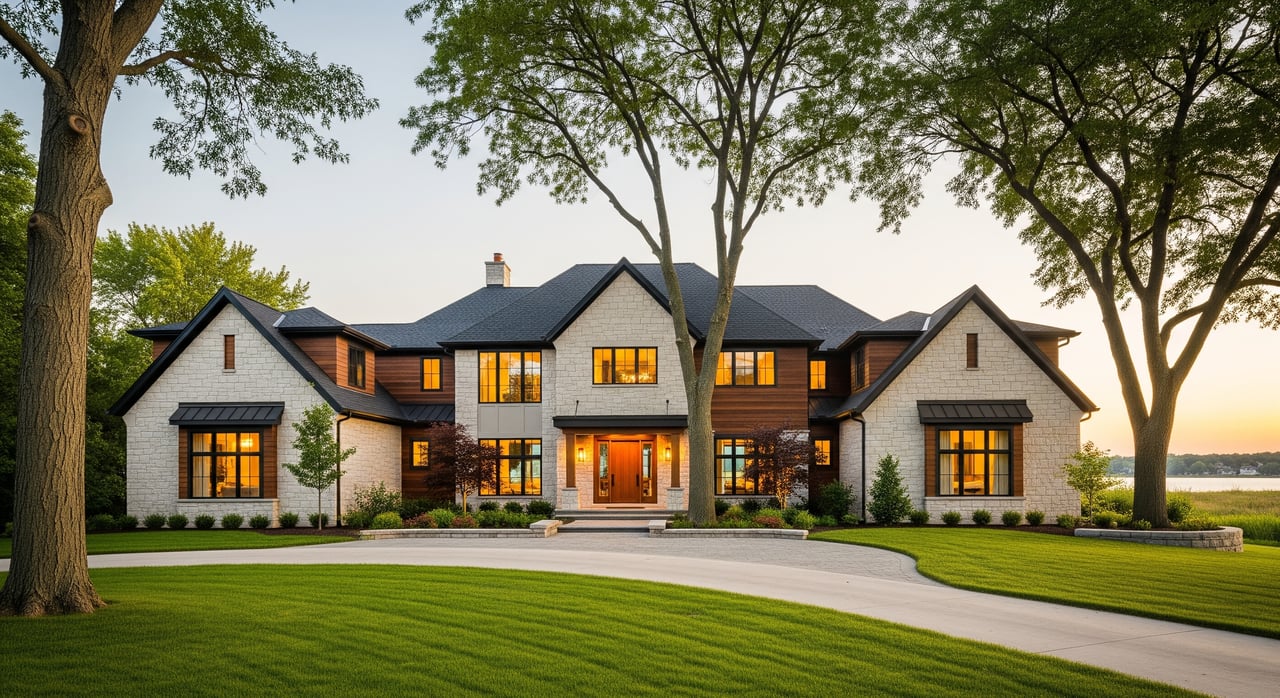
Pricing your Ashwaubenon home right the first time is the single biggest lever you control. It shapes how many buyers see your listing, how soon offers come in, and what you net at closing. If you’re planning to list in the next 60 to 120 days, a clear, data-driven pricing plan can help you avoid long days on market and stressful reductions. In this guide, you’ll learn how to use local metrics, smart search-price brackets, and a measured reduction cadence to maximize exposure and protect your bottom line. Let’s dive in.
Why list pricing matters in Ashwaubenon
Ashwaubenon is part of the greater Green Bay market, where seasonality, inventory, and buyer demand shift through the year. The right list price positions your home to compete against similar properties buyers are seeing right now. When your price aligns with local buyer behavior, you attract more qualified showings and improve your odds of strong offers early.
Before you set a number, confirm what the current market is actually doing. That local context is what turns pricing from guesswork into a plan you can trust.
Gather the right local data first
Pull these metrics for Ashwaubenon and Brown County before you choose a list price:
- Median and average sale price for the last 3, 6, and 12 months
- Active inventory and new listings per month
- Months of supply and absorption rate
- Median and average days on market (DOM)
- List-to-sale price ratio (final sale price divided by original list)
- Percent of listings with price reductions and typical reduction sizes
- Price-per-square-foot ranges by neighborhood and home type
- Seasonal patterns in the area, especially peak listing and buying months
Use local sources for accuracy. The Greater Green Bay Association of REALTORS provides monthly market stats for Brown County. The Wisconsin REALTORS Association publishes statewide and county reports. Your agent’s MLS pulls current comps and DOM rules, and Brown County property records provide assessment and tax context. National aggregators can add trend perspective, but lean on local data when making final calls.
Why this matters: DOM and list-to-sale ratio tell you how competitive the market is. Inventory and months of supply indicate whether buyers or sellers have the edge. Price-per-square-foot ranges help you adjust for size and finishes. Together, these inputs shape a realistic pricing window.
Use search-price brackets to boost exposure
Most buyers filter online by price ranges. When you price just under a common threshold, you show up in more filtered searches. For example, $299,900 can appear for buyers who cap their search at $300,000, while a $300,000 price could miss those eyeballs.
Follow this approach:
- Identify common brackets for your segment. Study current listings and portal ranges in Ashwaubenon for homes like yours.
- Choose a bracket based on your goal. If speed matters, land in the bracket with the broadest buyer pool. If you aim to maximize price and can be patient, you can sit near the top of your competitive range.
- Balance “just under” pricing and perceived value. Some buyers anchor on round numbers as a quality signal. In other cases, charm pricing (like $299,900) drives more views and showings. Your agent should test which tactic is working now in Ashwaubenon.
- Check your price-per-square-foot. A price that delivers an attractive $/sqft relative to your closest comps will strengthen your position in a bracket.
Build your competitive set like a pro
A solid competitive set, or “comps,” is the backbone of smart list pricing. Use this step-by-step method.
Define the area and property type
Start with your immediate subdivision or within about a half to one mile. Consider similar school boundaries, lot characteristics, and home ages. If your area is short on comps, include nearby neighborhoods with comparable access, build vintage, and features.
Set the time window
Use the most recent 60 to 120 days for active market signals. If inventory is thin, extend to 6 to 12 months. Short windows capture current shifts. Longer windows add context when few sales exist.
Select truly comparable properties
Aim for 3 to 8 closed sales and 3 to 6 active listings that match your home’s key traits:
- Beds, baths, and square footage within about 15 to 20 percent
- Similar lot size and home age
- Comparable condition and major updates
- Functional layout, garage, basement, and outdoor space
Make thoughtful adjustments
Adjust for condition and features that meaningfully impact value. Typical categories include kitchen and bath updates, flooring, mechanicals, finished basements, garage capacity, lot size, and outdoor amenities. Use local MLS guidance and price-per-square-foot ranges to keep adjustments consistent and justified.
Output a pricing range tied to strategy
Produce a tight range with three entries and align each position to a plan:
- Low end: targets faster sale and broad exposure; suited for high-visibility bracket placement
- Mid range: market price with balanced time-on-market expectations
- High end: aspirational position for standout condition or features; be ready for a longer DOM and potential future adjustments
Each entry price should include expected DOM and likelihood of multiple offers based on recent comps and Ashwaubenon’s current DOM trends.
A 60–120 day listing timeline
If you plan to go live in the next two to four months, use this schedule to keep pricing accurate and your listing competitive.
- 90–120 days out: Pull baseline metrics, review your competitive set, and decide on prep projects. Confirm your likely price range and search bracket strategy.
- 60–90 days out: Complete light repairs, paint, flooring refreshes, and exterior touch-ups that influence buyer perception. Re-evaluate your range based on planned improvements.
- 30–45 days out: Update comps and market indicators. Confirm professional photography, staging, and marketing assets. Fine-tune your list price against active competition.
- 7–14 days out: Re-check the latest reports. If inventory or DOM has shifted, adjust to the best bracket. Lock the list price and launch plan.
Plan reductions tied to days on market
Price reductions work best when they are planned, measured, and driven by clear signals. Start with the local median DOM for comparable homes in Ashwaubenon. Then use these checkpoints.
0–14 days: Capture the early spike
Expect the most views and showings in the first one to two weeks. If inquiry volume is strong and aligned with comps, hold steady. If showings lag and online engagement is low, confirm that your photos, description, and syndication are dialed in before touching price.
14–30 days: First review and modest move
If your showings are well below comparable listings and no solid offers appear, pair a marketing refresh with a modest reduction of about 1 to 3 percent. This can recapture bracket shoppers and spark new interest without signaling distress.
30–60 days: Re-check comps and adjust
If momentum is still slow after the first adjustment, consider a larger cut of about 2 to 4 percent, plus targeted promotions like a broker open, new media, or staging tweaks. Track how you now stack up against new listings.
60–120 days: Reposition with intention
If DOM is well beyond the local median and traffic remains low, a repositioning is prudent. That can mean a more substantial reduction of roughly 3 to 6 percent, targeted buyer incentives, or re-pricing to land in a more active bracket. Avoid a series of tiny cuts that erode trust; one well-supported adjustment often works better.
What to track each week
Monitoring the right signals helps you act with confidence. Review these weekly or biweekly:
- Showings per week compared with similar active listings
- Online metrics: views, saves, and contact requests versus comparable properties
- Buyer feedback from showings and open houses
- Days on market relative to the local median for your segment
- Competing listings: new entries, recent price changes, and pending activity
Clear triggers for a price change
You do not need to guess. Use firm triggers that tie back to your data:
- Showings are less than half the average for comparable actives over 2 to 3 weeks
- Online engagement trails similar listings after high-quality marketing is in place
- No credible offer by the local median DOM for your property type
- Multiple nearby price reductions or new competing listings undercut your position
- Appraisal risk surfaced by buyers points to a pricing gap
For minor underperformance, make a modest reduction and tighten marketing. After multiple weeks without improvement, move to a larger, data-backed reposition.
Special notes for estates and out-of-area sellers
If you are handling a probate or estate sale, or you live out of the area, be realistic about your goals and timeline. Many estates prioritize an efficient sale and minimal carrying costs. In those cases, pricing at or just under the market median for the competitive set can shorten DOM and reduce stress.
If you plan limited improvements, reflect that in your range and marketing. Buyers respond to clear pricing, transparent condition, and move-in timelines. Your agent can coordinate local vendors for cleanouts, minor repairs, and staging so you can focus on the big picture.
How a local team strengthens your pricing plan
A strong pricing strategy is part data, part execution. You need current Ashwaubenon metrics, firsthand knowledge of buyer behavior, and a listing process that puts your home in the best light. A boutique, hands-on team can move quickly, refresh marketing between checkpoints, and adjust based on what the market tells you.
Team Forehand specializes in full-service listing support across mid-market homes, estates, and investment properties in the greater Green Bay area. You get local comps pulled from the MLS, clear recommendations tied to DOM and list-to-sale ratios, and a repeatable process for photos, staging, and promotion. If your situation is complex, their vendor network and step-by-step coordination help you stay on track without losing time.
When you pair smart pricing with polished presentation and weekly performance reviews, you give your listing the best chance to sell quickly and for the right number.
Ready to price your Ashwaubenon home with confidence? Connect with Team Forehand for a free consultation or instant valuation, and get a tailored plan for your timeline and goals.
FAQs
How should Ashwaubenon sellers choose a list price in 60–120 days?
- Start with local metrics (DOM, inventory, list-to-sale ratio), build a tight comp set, and pick a price that lands in a high-visibility search bracket aligned with your goal for speed or maximum net.
What is a search-price bracket and why does it matter in Ashwaubenon?
- Buyers commonly filter by price ranges. Pricing just under a common threshold can place your home in more searches, increasing early visibility and showings.
When should I make the first price reduction on my Ashwaubenon listing?
- If showings and engagement trail comparable homes after 2 to 4 weeks and no strong offers emerge, pair a marketing refresh with a modest 1 to 3 percent reduction.
Are small, frequent reductions better than one larger change?
- Frequent tiny cuts can signal uncertainty. One well-timed, data-driven adjustment often works better, especially when combined with improved marketing and new media.
What weekly metrics predict if my price is working in Ashwaubenon?
- Track showings per week, online views and saves, buyer feedback, your DOM versus the local median, and activity in your competing set; use clear triggers to adjust as needed.