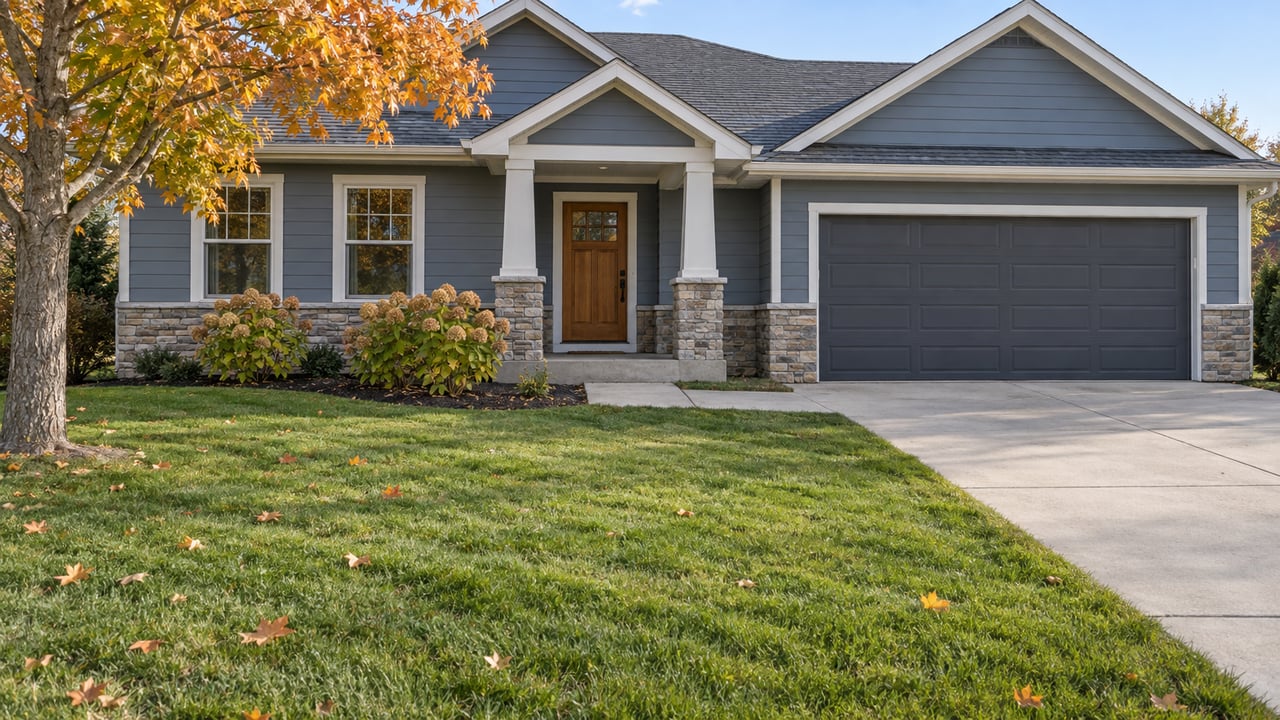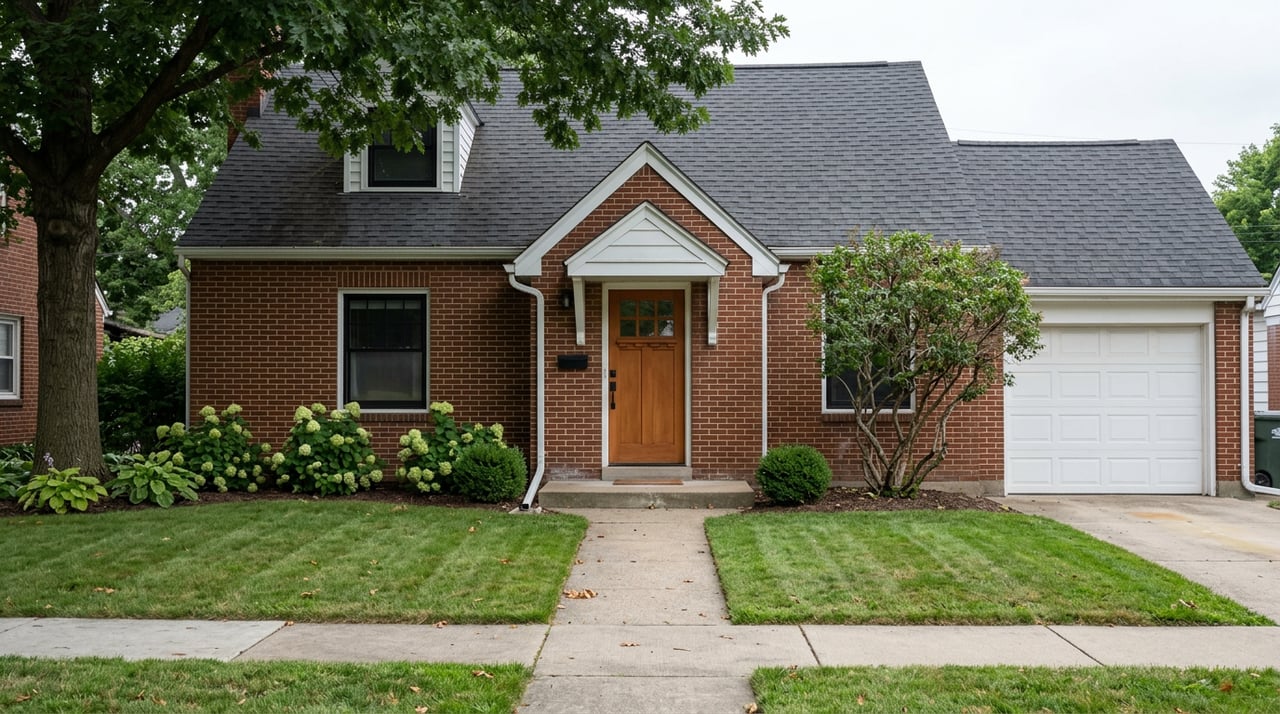
Picture a fairly common Green Bay scenario. A father remarries in his sixties. He and his second wife buy a modest three-bedroom on the east side together, and the deed lists both their names. When he dies, his adult children from his first marriage assume the house will be split according to whatever the will says, or divided among them if there's no will at all. Then someone tells them Wisconsin is a marital property state, and the math they expected is not the math they get.
That moment, not the listing price or the days-on-market number, is where most Green Bay probate sales actually start. Before anyone can talk about staging the house or setting an asking price, Wisconsin law has to answer a quieter question: how much of this house was ever the decedent's to leave in the first place.
The Classification Question Comes Before the Market Question
Wisconsin is one of only nine states that treats marital assets under a community property framework, governed by Chapter 766 of the Wisconsin Statutes and the Uniform Marital Property Act. In practice, that means the name on the deed is not what decides how much of a home enters an estate. Classification does. A house bought during the marriage is generally treated as marital property regardless of whose name appears on the title, while property one spouse owned before the marriage or received as a gift or inheritance can remain separate.
For an executor, this is the fact that reorders everything else. It determines whether the personal representative can act alone or needs a surviving spouse's consent to list the property. It determines how much of the sale proceeds actually belong to the estate versus the surviving spouse outright. And if there's no will, it can determine whether the house passes to the children at all.
If the decedent died without a will, and every one of the decedent's children is also a child of the surviving spouse, or there are no children, Wisconsin's intestacy rules give the surviving spouse the decedent's entire probate share of the estate, as Inherited Property Match explains. In a blended family, where some children are from an earlier marriage, the intestacy result can differ. This is not a paperwork inconvenience. It is the actual mechanism that decides who has authority to sign a listing agreement.
There is a way around most of this friction, but it has to be set up before death, not after. A transfer-on-death deed, recorded with the county Register of Deeds while the owner is alive, passes the property directly to a named beneficiary and sidesteps probate entirely. Wisconsin broadened these designations substantially through 2018 Wisconsin Act 332, and a marital property agreement, sometimes called a Washington will provision, lets spouses direct property to a named person, trust, or entity without going through probate at all. Neither tool helps an executor who is already administering an estate where nothing was recorded in advance. It is worth knowing about for clients who are settling one estate now and thinking about their own later.
What Actually Determines the Timeline
Once the classification question is settled, the size of the estate decides which path it takes. Wisconsin allows a transfer by affidavit, a no-court option, when the decedent's total solely owned property subject to administration comes to $50,000 or less, according to SwiftProbate. Above that threshold, an estate typically moves through informal or formal administration supervised by the county's Register in Probate, in Brown County's case a court appointed office that also handles guardianships and protective placements.
| Path | When it applies | Who signs off |
|---|---|---|
| Transfer by affidavit | Solely owned property at $50,000 or less | Heirs, without full court supervision |
| Informal administration | Larger estates, no contest, no attorney required, according to the Wisconsin Court System guide | Register in Probate |
| Formal administration | Contested wills, or when the Registrar declines informal handling | Requires a licensed attorney |
The filing fee itself is not what stretches the timeline. Brown County charges 0.2 percent of the estate's value, net of liens, for estates over $10,000, and a flat $20 for anything at or below that. The real time cost is procedural. Notice of the hearing has to be mailed to every heir and beneficiary at least 20 days in advance, and the estate has to publish notice in a newspaper of general circulation in Brown County, typically the Green Bay Press-Gazette, for three successive weeks. Layer in a creditor claim period that generally runs three to four months, and a formal Wisconsin probate commonly takes six months to a year to clear before a sale can close.
Compare that against the pace of an ordinary Green Bay transaction. As of June 2026, homes in the metro were going pending in roughly 43 days on average. A probate sale is not competing on the same clock. An executor who lists a house expecting a six-week turnaround is measuring the wrong process against the wrong benchmark, and that mismatch is what tends to catch families off guard mid-sale, not the market itself.
What Executors Do and Do Not Have to Disclose
Wisconsin's real property condition report generally exempts a fiduciary, meaning a personal representative or trustee who never lived in the home, from having to complete the full disclosure a typical homeowner would sign. That exemption exists for a practical reason. An executor administering their late aunt's house three states away has no way to honestly answer questions about a roof leak from a decade ago they never witnessed.
The exemption is narrower than it sounds. It does not allow an estate to conceal a defect the personal representative actually knows about, and marketing a property as-is does not erase every disclosure obligation that remains. If an executor has direct knowledge of a problem, whether from a sibling who lived in the house, a recent inspection, or their own visits to the property, that knowledge still needs to be handled honestly. The exemption covers what a fiduciary could not reasonably know, not what they do know and would rather not say.
Getting the House Ready Before It's a Listing
A probate house rarely goes straight from empty rooms to a photo shoot. Somewhere between the court process and the for-sale sign, someone has to deal with the contents, and Green Bay has a small set of local companies built specifically for that step. Lifetime Treasures Estate Sales & Services, headquartered in Green Bay, has spent more than 20 years running on-site estate sales and offering related property preparation work across northeast Wisconsin. Caring Transitions of Northeast Wisconsin, a local branch of a national franchise, handles the appraisal, sale coordination, and donation logistics that come with settling an estate or downsizing a family home.
The order matters. Trying to schedule a liquidation sale before the court has issued letters to the personal representative, or trying to list a house before creditor claims have run their course, tends to create rework rather than saving time. An executor who lines up the right vendor at the right point in the timeline, rather than the first point they think of it, usually gets through the process with fewer surprises and a cleaner accounting to show the court and the other heirs at the end.
A Short List of What to Confirm Early
- Whether the property was acquired during the marriage, which affects how much of it counts as marital property versus the decedent's separate estate
- Whether a transfer-on-death deed was ever recorded with the county Register of Deeds, which could remove the house from probate entirely
- The estate's total value, to know whether transfer by affidavit is available or whether informal or formal administration is required
- Who the personal representative is under the Domiciliary Letters or Letters of Administration
- Whether any heir has firsthand knowledge of a property defect that would still need to be disclosed despite the fiduciary exemption
FAQ
Does inheriting a house in Wisconsin trigger a property tax reassessment? No. Wisconsin does not use a transfer-triggered property tax reset, so an inheritance by itself does not spike the property tax bill the way it can in some other states.
Does Wisconsin charge an inheritance or estate tax? Wisconsin currently has no estate tax and no inheritance tax for deaths occurring now.
If the decedent lived out of state but owned the Green Bay house, does Wisconsin probate still apply? Generally yes for the real property itself. Probate is typically opened in the county where the decedent was domiciled, but a Wisconsin proceeding can also be opened in the county where the property sits, and out-of-state heirs usually need to resolve the Wisconsin title question separately from any probate happening in the decedent's home state.
Settling a house that came through probate is rarely just a real estate transaction. It is a legal timeline, a family conversation, and a property sale happening at the same time, and getting the sequence wrong in any one of those areas slows down the other two. If you're an executor or personal representative trying to sort out what a Green Bay or northeast Wisconsin property is actually worth, and what has to happen before it can go on the market, Team Forehand works through this specific kind of sale regularly and can walk through the timeline with you before you commit to a listing date.
This article is general information, not legal, tax or financial advice. Consult a qualified professional about your situation.